Two years ago I received an email that changed a lot in my professional life — I was accepted into the Microsoft MVP program in the Azure Infrastructure as Code category. Today, as I look back on this journey, I want to reflect on what it has meant, what I’ve been up to, and why I believe this program still matters.
How it started #
It all began with the Azure Bicep Workshop — an open-source, hands-on workshop I created to help people learn Azure Bicep from scratch. The idea was simple: Bicep was (and still is) a fantastic tool, but the learning curve for newcomers wasn’t always smooth. I wanted to bridge that gap with a practical, approachable workshop that anyone could pick up and run.
What happened next exceeded my expectations. The workshop was adopted by multiple companies and individuals across the community. People forked it, ran it internally, contributed back, and used it as a foundation for their own training programs. That kind of organic adoption is one of the most rewarding things in open source — you build something, put it out there, and it takes on a life of its own.
This community contribution, along with my blog posts and conference talks, became the foundation for my MVP nomination.
Working with the product team #
One of the most valuable aspects of being an MVP is the direct connection to Microsoft’s product teams. Over the past two years I’ve been providing feedback across several areas:
- Azure Bicep — language features, developer experience, and tooling improvements
- Azure Verified Modules (AVM) — real-world usage patterns and module gaps
- IaC tooling — VS Code extensions, CI/CD integration, and documentation
It’s a two-way street — the product team shares early previews and roadmap ideas, and MVPs bring real-world perspective from the field. Knowing that your feedback shapes the tools thousands of engineers use daily is incredibly motivating.
MVP Summit #
Another highlight of the program is the annual MVP Summit held at Microsoft’s campus in Seattle. I’ve attended virtually so far and it was a great experience — packed with deep-dive sessions, direct conversations with product teams, and the chance to meet fellow MVPs from around the world. Even in a virtual format, the energy and openness of those discussions is remarkable. That said, I’ve always wanted to make the trip to Seattle and attend in person — there’s something about being on campus, grabbing coffee with the people who build the tools you use every day, and having those hallway conversations that simply don’t happen over a video call. Hopefully next time!
Life at GitLab and the SME role #
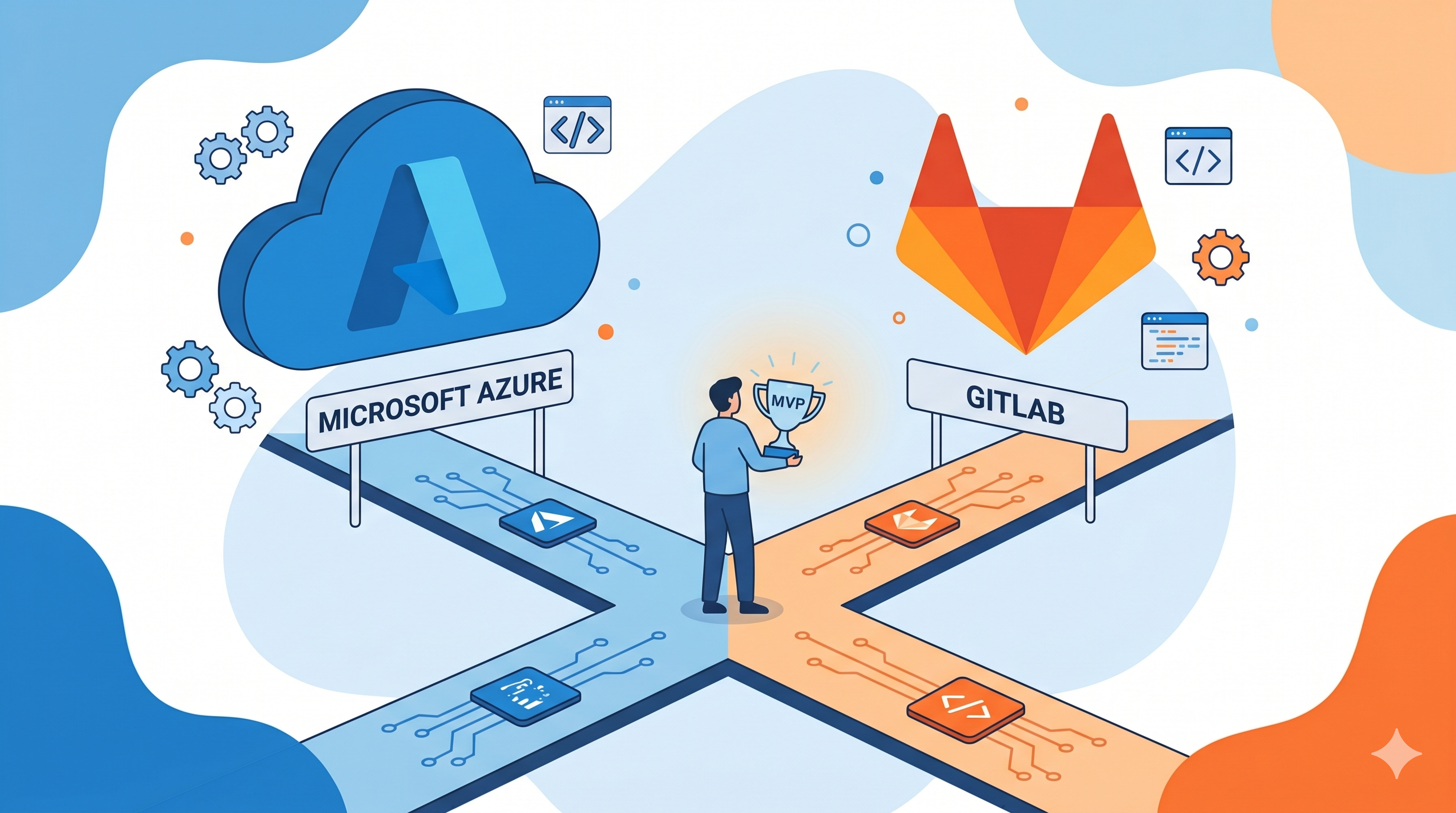
My day job as a Technical Architect at GitLab keeps me busy in a completely different ecosystem, and I enjoy that balance. At GitLab I serve as a subject matter expert (SME), supporting my peers across the Professional Services team on complex customer engagements. Some of the areas I’ve contributed to over the past two years:
- Migration utilities and deployment automation tooling for customers
- Internal enablement and knowledge sharing across the PS team
- Product improvements and feature contributions to GitLab itself
Contributing to the GitLab AI Gateway #
One recent example I’m particularly proud of is my contribution to the GitLab AI Gateway — adding support for custom HTTP headers when making requests to AI models. This unlocks more complex enterprise setups where AI providers require special authentication or tracking headers beyond standard API keys.
In particular, it makes integration with Azure AI Foundry straightforward for enterprise customers hosting OpenAI models (GPT-4, GPT-5, GPT-5.5) in their private networks — they can now connect GitLab’s AI features to those endpoints with the required subscription keys and custom headers. The MR was merged into AI Gateway v1.407.0 and is available in production.
Bridging two ecosystems #
Being an MVP in the Microsoft world while working deep in the GitLab ecosystem gives me a unique vantage point. I get to see how both platforms evolve, where they overlap, and how our customers can get the best out of both. Posts like how to build and deploy to Azure with GitLab and leveraging GitLab CI/CD components for deployments in Azure are direct results of that cross-pollination.
YouTube and content creation #
I’ve also been dipping my toes into YouTube. It’s still a small channel, but I enjoy the format — sometimes a five-minute video explains something better than a thousand-word blog post. Whether it’s walking through Bicep fundamentals or demoing a deployment pipeline, video adds a layer of context that written content alone can’t always deliver. Expect more of this going forward.
Looking ahead #
Two years in, the MVP program continues to be a source of energy and purpose for me. It pushes me to stay sharp, share what I learn, and stay connected with a global community of practitioners who care deeply about infrastructure, automation, and developer experience.
Here’s what I’m looking forward to:
- Continuing to contribute to Azure Bicep and IaC tooling
- Creating more workshops, blog posts, and video content
- Bridging the gap between Microsoft and GitLab ecosystems for teams that rely on both
- Attending the MVP Summit in Seattle — in person this time!
If you’re considering applying to the MVP program or wondering whether community contributions “count” — they absolutely do. Build something useful, share it openly, and the rest follows.
Thank you to everyone who has supported me along the way — the Microsoft MVP community, the product teams, my colleagues at GitLab, and you, the readers of this blog. 🙏